

Halliwick Concept for Aquatic Therapy
Empowering Movement, Enhancing Lives: Mastering Aquatic Rehabilitation.
Course Overview: Redefining Aquatic Rehabilitation
The Halliwick Concept for Aquatic Therapy is an evidence-based program designed to revolutionize your approach to water-based rehabilitation. Originating in the late 1940s by James and Phyl McMillan, this concept has evolved into a fundamental methodology for teaching individuals, particularly those with physical and/or learning difficulties, to achieve independence and control in water.
This course delves into the core principles of hydrodynamics and biomechanics, providing participants with both theoretical knowledge and extensive practical application of the renowned 10-Point Program. You will gain advanced skills in patient handling, balance training, and movement facilitation, enabling you to deliver effective, patient-centered aquatic therapy across a spectrum of conditions.
Holistic Approach
Addresses physical, personal, recreational, social, and therapeutic benefits.
Global Recognition
Supported by the International Halliwick Association (IHA).
Empowering Patients
Focuses on fostering independence and self-control without flotation aids.
The Halliwick Concept
A Philosophy of Empowerment in Water
At its heart, the Halliwick Concept is more than just a set of techniques; it’s a philosophy centered on equality of opportunity and the inherent joy of movement in water. Developed by James and Phyl McMillan, the concept emphasizes the individual’s ability to learn and control their own balance, rather than relying on external aids . Every participant is considered a ‘swimmer,’ fostering an inclusive and empowering environment.
The approach recognizes that being in water is fundamentally different from being on land, requiring a unique adaptation process. It systematically guides individuals through stages of mental and physical adjustment, leading to greater confidence and independence. This method has significantly influenced traditional swimming teaching and hydrotherapy techniques worldwide.
Core Principles
1. Independence
Fostering self-reliance and control in the aquatic environment.
2. Balance Control
Developing equilibrium and stability through specific rotational controls.
3. Fun & Engagement
Utilizing group activities and games to enhance motivation and social interaction.
4. One-to-One Support
Providing adjustable and minimal assistance to encourage self-discovery.
5. Hydrodynamic Understanding
Applying principles of water physics to facilitate movement and learning.
Mastering the 10-Point Program
A Systematic Path to Aquatic Proficiency
The cornerstone of the Halliwick Concept is its 10-Point Program, a structured, progressive learning sequence designed to help individuals master control of their body in water. Each point builds upon the last, gradually increasing the swimmer’s confidence, balance, and freedom of movement.
This program is not merely about swimming strokes; it’s about developing fundamental water skills that are crucial for both recreational swimming and therapeutic applications. Participants will engage in hands-on practice, case-based learning, and problem-solving to effectively implement each stage.
The 10 Points
- Mental Adjustment: Adapting to the aquatic environment and learning appropriate responses to water’s unique properties, including breath control.
- Disengagement: Progressively reducing reliance on physical and mental support from the instructor, fostering self-sufficiency.
- Transversal Rotation Control: Gaining control over rotation around the frontal-transversal axis, crucial for moving between upright and supine positions.
- Sagittal Rotation Control: Developing control over rotation around the sagittal-horizontal axis, essential for lateral movements and stability.
- Longitudinal Rotation Control: Mastering rotation around the longitudinal/vertical axis, enabling controlled rolling and turning in the water.
- Combined Rotation Control: Integrating control over multiple axes of rotation for complex, fluid movements.
- Upthrust: Understanding and utilizing the buoyancy of water to maintain positions and initiate movements, often referred to as “Mental Adjustment to Upthrust.”
- Balance in Stillness: Achieving and maintaining a stable, balanced position in water despite external disturbances.
- Turbulent Gliding: Experiencing movement through water without active propulsion, guided by the instructor’s creation of turbulence.
- Simple Progression and Basic Swimming Movement: Developing foundational swimming skills and functional movement patterns based on the acquired water competence.
Upon successful completion of this course, participants will be able to:
- Comprehend and apply the foundational philosophy and core principles of the Halliwick Concept.
- Master the 10-Point Program for systematic development of aquatic independence and control.
- Develop advanced skills in water-based therapy techniques for neurological and musculoskeletal conditions.
- Implement effective balance and mobility training strategies within aquatic environments.
- Adapt and apply the Halliwick method for diverse patient populations, including pediatric and adult rehabilitation.
- Enhance clinical reasoning for designing and executing individualized aquatic therapy programs.
- Improve patient outcomes by fostering greater motor control, functional recovery, and confidence in water
The Halliwick Concept is highly effective across a wide range of conditions, including but not limited to:
- Enhanced Motor Control: Improves coordination, strength, and precision of movement.
- Improved Balance & Stability: Develops core stability and equilibrium in a supportive environment.
- Increased Functional Recovery: Facilitates the return of daily living activities and mobility.
- Patient-Centered Approach: Empowers individuals through active participation and self-discovery.
- Psychological Well-being: Boosts confidence, reduces anxiety, and promotes social interaction.
- Pain Management: Utilizes water’s properties to reduce load and facilitate pain-free movement.
- Neurological Conditions: Stroke, Cerebral Palsy, Multiple Sclerosis, Spinal Cord Injury.
- Musculoskeletal Conditions: Post-surgical rehabilitation, chronic pain, arthritis, back pain.
- Pediatric Rehabilitation: Developmental delays, motor skill acquisition.
- Geriatric Rehabilitation: Balance training, fall prevention, mobility maintenance.
- Amputee Rehabilitation: Early mobility and prosthetic training.
FAQ
How does Halliwick differ from standard hydrotherapy?
While standard hydrotherapy often focuses on specific exercises for injury recovery, the Halliwick Concept is a broader approach that emphasizes total body control and independence. It has evolved into “Water Specific Therapy” (WST), which applies Halliwick principles to specific clinical goals like improving postural control, reducing spasticity, and enhancing functional mobility
Which patient populations benefit most from the Halliwick Concept?
- Neurological: Stroke, Cerebral Palsy, Multiple Sclerosis, and Parkinson’s Disease.
- Pediatric: Developmental delays and motor skill challenges.
- Musculoskeletal: Post-surgical rehab, chronic pain, and arthritis.
- Psychological: Improving confidence, social interaction, and mental well-being
Do I need to be a strong swimmer to take this course?
You do not need to be a competitive swimmer, but basic comfort and the ability to move independently in water are required. The practical sessions involve hands-on techniques in the pool, so being at ease in an aquatic environment is essential for effective learning.
Is the Halliwick Concept evidence-based?
Yes. The Halliwick Concept and its therapeutic application (Water Specific Therapy) are supported by extensive research in the fields of biomechanics and neurorehabilitation. It is recognized globally by organizations such as the International Halliwick Association (IHA) and the International Aquatic Therapy Faculty (IATF)
View Course Dates & Enroll
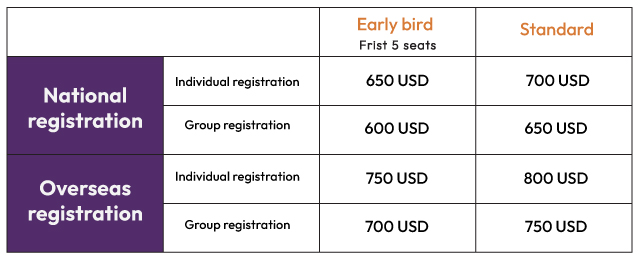
Registration Fee
Registration process
For inquiries & booking, please contact Primephysio office in Egypt