
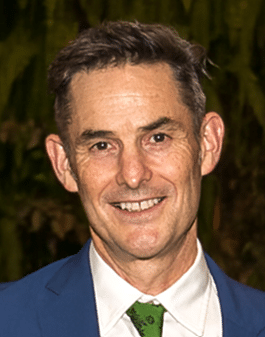
Prof. Paul Hodges Teaching In LONDON
30-31 Jan, 2027
Integrating Motor Control Training and Modern Pain Science
From Research to Clinical Practice for management of low back and pelvic pain
Course Overview:
- This clinical course presents an integrated approach to motor control training for pain and dysfunction in the lumbar and pelvic regions, grounded in modern pain science.
- It draws on the latest research and practice in spinal and pelvic motor control, continence and pain, for both women and men. Many current training models focus on static stability and overlook the need for dynamic control.
- The course brings together training for optimal control of posture, movement and muscle activation with modern pain management. It takes you through the full rehabilitation process, from initial assessment to high-level rehabilitation, and a key feature is selecting the right patients by identifying their pain mechanism.
Course Content:
- An integrated model of neuromuscular control: how lumbopelvic control, pelvic floor function and breathing are coordinated
- How the nervous system controls the spine, from early work on the deep trunk muscles (transversus abdominis) to today’s ideas
- How movement changes with pain and why this differs between patients, including changes in the brain and back muscles in long-term back pain
- Contemporary pain neuroscience: identifying nociceptive, neuropathic and nociplastic pain mechanisms
- The evidence on motor control exercise, why trial results vary, and the pros and cons of using ultrasound imaging in rehabilitation.
- Clinical assessment and treatment selection: finding the motor control problem in each patient and choosing the right treatment at the right time.
- Practical lab and case studies: retraining trunk control with progression into function, and going beyond the back to breathing, the pelvic floor and incontinence.
Teaching style:
A clinical, hands-on course that combines updates on the latest research with practical lab sessions and case studies.
Learning Objectives
By the end of the course, you will be able to:
- Explain an integrated model of neuromuscular control that links lumbopelvic control, pelvic floor function and breathing.
- Describe how the nervous system controls the spine and how movement changes with pain.
- Identify the underlying pain mechanistic descriptor (nociceptive, neuropathic or nociplastic) to select the right patients for motor control training.
- Assess patients to find the motor control problem and distinguish helpful from unhelpful neuromuscular control strategies.
- Interpret what clinical trials show about motor control exercise and why results vary.
- Choose the right treatment for the right patient at the right time.
- Apply motor learning strategies to restore the function of the deep muscle system (transversus abdominis, multifidus, pelvic floor and diaphragm) and integrate it with the superficial muscle system.
- Consider how ultrasound imaging can contribute to rehabilitation, weighing its pros and cons.
View Course Dates & Enroll
Tutors

Prof. Paul Hodges
DSc, MedDr, PhD, Drhc, BPhty(Hons), FACP, FQA, FISEK, FAHMS, FAA
Professor & NHMRC Leadership Fellow
Director, Centre for Innovation in Pain and Health Research (CIPHeR), The University of Queensland, Brisbane, Australia.
Chair, Terminology Task Force, International Association for the Study of Pain.
- Professor Paul Hodges is one of the most influential researchers in movement and pain science working today.
- He holds four doctorates: one in Physiotherapy, two in Neuroscience and an honorary doctorate in Medicine.
- He directs a research centre for pain and health at the University of Queensland and holds a top-level NHMRC Leadership Fellowship. His research has given clinicians new ways to understand and treat back pain, continence problems and breathing disorders, and those treatments have been tested and adopted around the world.
- He has written more than 400 scientific papers and four books.
- He is a Fellow of the Australian Academy of Science, an honour that goes to the country’s most distinguished scientists. He is also a Fellow of the Australian College of Physiotherapists, and an Honoured Member of the Australian Physiotherapy Association, its highest honour.
- His awards include:
- The NHMRC Achievement Award for the Top-Ranked Research Fellow in Australia
- The Susanne Klein-Vogelbach Award
- The Delsys Prize for Innovation in Electromyography
- Young Australian of the Year for Science and Technology
- He was also the first physiotherapist ever to join the NHMRC fellowship scheme.
Date & Location
London
30-31 Jan, 2027
Registration Fee:

Registration Process
- Submit the registration fee
- Fill out this registration form.
- To confirm your registration, kindly send proof of payment via WhatsApp.